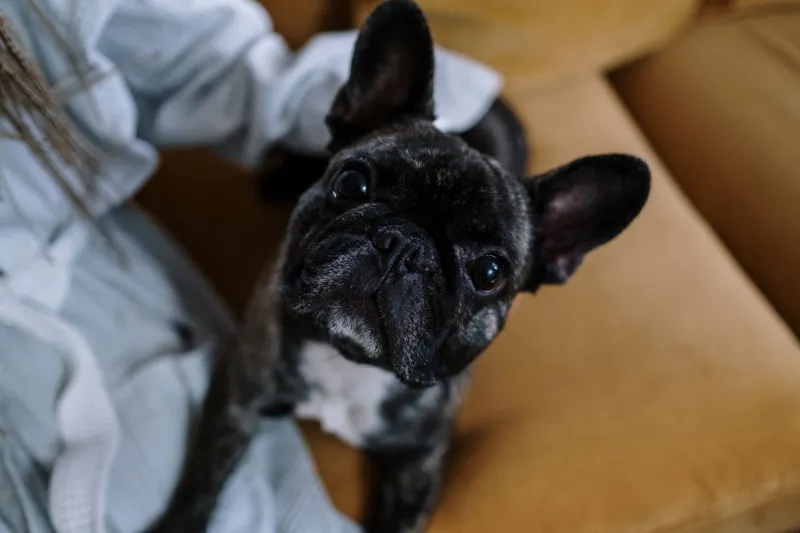
That Snuffling, Snorting Little Gremlin: What's Normal (and What's Not) in Your Frenchie's Breathing

If you've spent more than five minutes around a French Bulldog, you already know the deal. These dogs are loud. Not bark-at-everything loud (well, sometimes that too), but loud in a deeply personal, almost conversational way. They snore through naps, grunt when they're excited, and produce sounds during a simple walk that would make a stranger stop and stare.
Most of it is totally normal. Some of it, though, deserves a closer look.
As Frenchie owners, it's easy to laugh off every wheeze as "just their thing." And honestly, a lot of the time, that's fair. But French Bulldogs are a brachycephalic breed—meaning their flat faces and compressed airways are a core part of their anatomy—and that setup comes with a real range of respiratory experiences. Some of those experiences are fine. Others are your pup's way of telling you something's off.
Let's break it down.
The Frenchie Sound Library: What You're Probably Already Hearing
First, the greatest hits. If your Frenchie is making any of these sounds on a regular basis, welcome to the club—this is just life with a bat-eared little weirdo.
The Sleep Snore. This is the one everyone warns you about before you bring a Frenchie home, and no amount of warning fully prepares you. French Bulldogs snore. A lot. Deeply. Sometimes rhythmically, sometimes in bursts. It's caused by soft tissue vibrating in their narrower-than-average airway, and for most dogs, it's completely harmless. Think of it as white noise you didn't ask for but will eventually learn to love.
The Reverse Sneeze. This one freaks new owners out every single time. Your dog suddenly inhales rapidly and repeatedly, making a honking or snorting sound that looks and sounds alarming. It lasts anywhere from five seconds to a minute, and then it stops like nothing happened. Reverse sneezing is super common in brachycephalic breeds and is usually triggered by excitement, eating too fast, or catching a whiff of something irritating. It's not dangerous. Gently massaging your pup's throat or briefly covering their nostrils can help it pass faster.
Post-Play Panting. After a romp around the backyard or a game of tug, your Frenchie is going to sound like a tiny steam engine. Heavy panting in short bursts after exercise is normal—they're just not built for endurance. Give them a cool, shaded spot and some water, and they'll regulate.
The Grunt-Snort Combo. This usually happens during greetings, mealtime anticipation, or when your Frenchie is trying to communicate something very important (like the fact that you sat in their spot). It's expressive, it's goofy, and it's one of the things that makes this breed so weirdly charming.
When the Soundtrack Changes: Signs Something's Actually Wrong
Here's where things get a little more serious. Brachycephalic Obstructive Airway Syndrome—BOAS, if you want to get clinical about it—is a real condition that affects many flat-faced breeds, including French Bulldogs. It's not a single problem but a cluster of anatomical issues: narrowed nostrils, an elongated soft palate, a narrow trachea, and everted laryngeal saccules (small pouches in the larynx that get pulled into the airway).
Not every Frenchie has BOAS. But the breed's structure puts them at higher risk, and it's worth knowing what to watch for.
Labored breathing at rest. There's a difference between a Frenchie snoring through a nap and a Frenchie who seems to be working hard to breathe even when they're lying still. If your dog's sides are heaving, their neck is extended, or they seem tense during rest, that's worth paying attention to.
Blue or purple-tinged gums. This is a serious one. Pale, blue, or purple gums mean your dog isn't getting enough oxygen. If you see this, don't wait—call your vet or head to an emergency animal clinic immediately.
Exercise intolerance. If your Frenchie collapses, faints, or struggles to recover after minimal activity—a short walk, a few minutes of play—something's wrong. Frenchies aren't marathon runners, but they should be able to handle a normal level of daily movement without crashing.
Chronic gagging or regurgitation. An elongated soft palate can cause dogs to gag frequently, especially after eating or drinking. If this is happening multiple times a day, it's more than a quirk.
Loud, high-pitched breathing (stridor). There's a difference between snoring and stridor. Stridor is a high-pitched, almost whistling sound that happens with every breath. It often signals significant airway narrowing and should be evaluated by a vet.
Nostrils that look pinched shut. Take a look at your Frenchie's nose. Healthy nostrils should be open enough to allow airflow. If they look like tiny slits that barely move when your dog breathes in, that's called stenotic nares—and it's one of the more correctable components of BOAS with a relatively minor surgical procedure.
What to Do If You're Concerned
First, don't panic. Not every Frenchie with loud breathing has a serious problem. But if you're noticing a pattern—especially a combination of the symptoms above—a vet visit is the right call.
A good starting point is a thorough physical exam. Your vet can assess your dog's nostrils, listen to their breathing, and evaluate their overall respiratory function. From there, they may recommend imaging or a referral to a veterinary specialist if BOAS is suspected.
For dogs diagnosed with BOAS, treatment options range from weight management and lifestyle adjustments (keeping them cool, limiting strenuous exercise, using a harness instead of a collar) to surgical correction of the anatomical issues. Many dogs experience significant improvement after surgery and go on to live comfortable, happy lives.
The Bottom Line
Your Frenchie's sounds are part of what makes them them. The snores, the reverse sneezes, the dramatic post-walk panting—most of it is just the Frenchie experience, and it's genuinely one of the more endearing things about the breed.
But being a good Frenchie owner means knowing your dog's normal. Record a video of their breathing if something seems off. Track when symptoms happen and how often. And don't let the "oh, all Frenchies sound like that" mentality talk you out of getting something checked that's genuinely bothering you.
Your pup can't tell you when they're struggling. Paying attention to their sounds is one of the best ways you can advocate for them.