Come Here, You Little Gremlin: The Real Reason Your Frenchie Won't Come When Called
Picture this: you're at the dog park, leash in hand, ready to head home. You call your Frenchie's name. They look directly at you. You make eye contact. And then — without a single ounce of shame — they turn around and waddle in the exact opposite direction. Classic.
If this sounds painfully familiar, welcome to the club. Recall training — teaching your dog to come when called — is one of the most important skills any pup can have. It's also one of the biggest headaches Frenchie owners consistently run into. And it's not because you're doing a bad job. It's because French Bulldogs are, well, French Bulldogs.
Why Frenchies Are Wired to Ignore You
Let's start with some honesty: French Bulldogs were not bred to follow commands. They weren't herding sheep, flushing birds, or running search-and-rescue missions. They were bred to be companions — charming, funny, lovable little couch companions. That means generations of selective breeding went into making a dog that is emotionally tuned into people, but not exactly hardwired to take orders from them.
The result? A breed with a genuinely independent streak. Frenchies think for themselves. They weigh their options. They consider whether coming to you right now is actually worth interrupting whatever fascinating smell they've discovered near that trash can. Spoiler: sometimes the trash can wins.
There's also a prey drive factor that surprises a lot of new owners. French Bulldogs aren't sight hounds or working dogs, but they absolutely have moments of laser-focused fixation — on a squirrel, a blowing leaf, another dog, or literally just a weird shadow on the sidewalk. When that switch flips, your voice becomes background noise.
And then there's stubbornness. Oh, the stubbornness. Frenchies are smart enough to understand what you want. They just don't always agree that your wants should be their priority. It's not defiance exactly — it's more like they're running their own internal cost-benefit analysis, and you haven't made the reward column compelling enough.
The Mistakes Most Owners Make Early On
Before we get into fixes, let's talk about a few common ways recall training goes sideways — because a lot of owners accidentally make this harder without realizing it.
Using recall to end the fun. If every single time you say "come," you then clip on the leash and leave the park, your Frenchie is going to connect the word "come" with "fun is over." Dogs are great at pattern recognition. You've essentially trained them to avoid the cue.
Calling them and then not following through. If your pup ignores you and you just... let it go, you've taught them that ignoring you is a totally valid option. Every unanswered recall chips away at the behavior.
Repeating the cue over and over. "Biscuit. Biscuit. BISCUIT. Come here. BISCUIT, COME." Sound familiar? Repeating the cue teaches your dog that the first few times don't really count. Say it once, mean it, and follow up.
Only practicing in distracting environments. The dog park is basically the hardest possible place to work on recall. If you haven't built the skill at home first, don't expect it to magically appear when there are twelve other dogs running around.
What Actually Works: A Realistic Training Plan
Okay, so how do you build a recall that holds up? Here's a practical approach that accounts for the fact that you're working with a Frenchie, not a Border Collie.
Start inside, with zero distractions. Seriously, begin in your living room. Call your pup's name, say "come," and the moment they take a single step toward you, celebrate like they just won the Super Bowl. Treats, praise, excited voice — go all in. Frenchies respond well to enthusiasm and high-value rewards. We're talking real chicken, cheese, or whatever makes their eyes go wide.
Make coming to you the best thing that happens all day. Every single time your Frenchie comes when called — whether you asked or not — reward it. Build that association until "come" means "amazing things are about to happen to me."
Practice the "recall party" trick. Have a family member hold your pup at one end of the hallway while you go to the other end. Call them, and when they arrive, throw an absolute party. Then switch. Back and forth. It builds speed and enthusiasm into the behavior.
Use a long line outdoors before going off-leash. A 20 or 30-foot training lead gives your Frenchie the feeling of freedom while keeping you in control. If they ignore the recall, you can gently reel them in without a chase — because chasing your dog teaches them that running from you is a great game.
Never punish them for coming late. Even if it took four minutes and three treats and a small emotional breakdown on your part — when they finally come, you reward them. Punishing a slow recall teaches them that arriving is a bad idea.
Practice "come" and then let them go back to playing. Break the pattern of recall always meaning the fun ends. Call them over, give a treat, say "go play," and release them. Do this multiple times before you actually leave. Eventually, "come" stops being a threat.
Keeping Your Frenchie Safe When Recall Fails
Here's the honest truth: even with consistent training, a Frenchie's recall may never be 100% reliable in every situation. And that's okay — as long as you plan for it.
Management is not a failure. Keeping your pup on leash in unfenced areas isn't admitting defeat; it's being a responsible owner. Frenchies are also a brachycephalic breed, which means overexertion in the heat can become a medical emergency fast. A dog who bolts and overheats is a dog in serious danger.
Invest in a well-fitted harness with a secure clip. Make sure your pup's ID tags are current and their microchip information is registered and up to date. If you're letting them off-leash, only do it in fully fenced areas until their recall is genuinely solid.
Also, learn your dog's triggers. If squirrels send your Frenchie into a full blackout state, keep them leashed near wooded areas. Know what breaks their focus and manage the environment accordingly.
Is a Perfect Recall Even Possible?
Honestly? For most Frenchies, "perfect" is a high bar. What's achievable — with consistency, patience, and the right rewards — is a recall that works most of the time, in most situations. That's actually really good. That's the goal.
The owners who get the best results are the ones who keep training sessions short (five minutes max), keep them fun, and never stop reinforcing the behavior even after it's established. Recall isn't a skill you teach once and check off the list. It's something you maintain.
Your Frenchie isn't ignoring you because they don't love you. They absolutely love you. They just also really love that smell over there, and that dog, and that piece of something mysterious on the ground. Your job is to make yourself more interesting than all of it — at least some of the time.
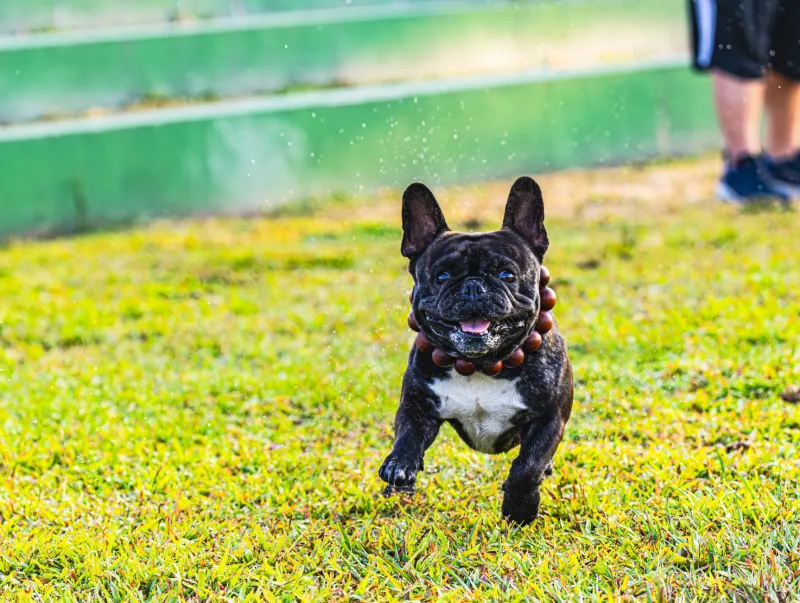
And honestly? Given how adorable they are when they finally come barreling toward you at full speed, ears flapping, tongue out — it's worth every treat in the bag.