Silent but Deadly: The Truth About French Bulldog Gas (and How to Survive It)
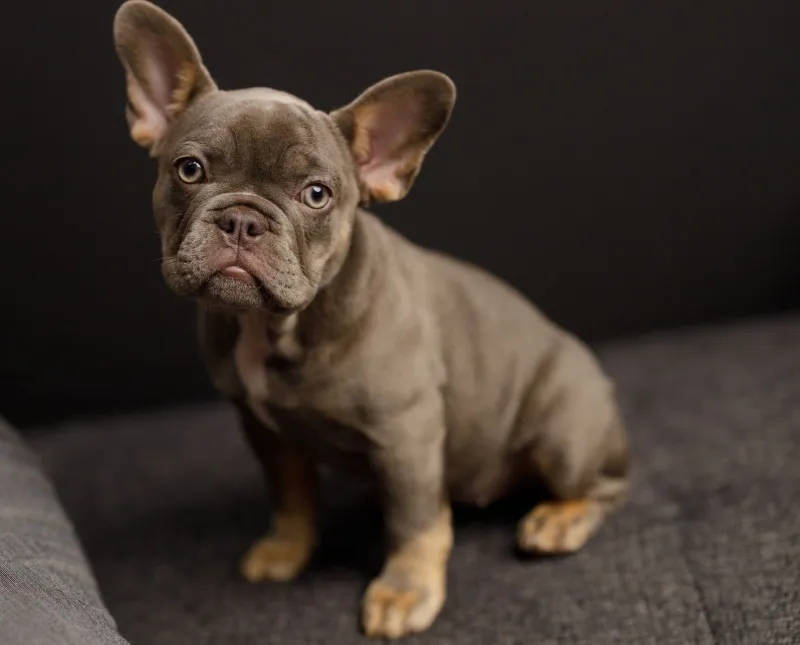
You're curled up on the couch, Frenchie snuggled against your leg, living your best life. Then it hits. That smell. You look down at your dog. Your dog looks up at you with those big, innocent eyes, completely unbothered. And you think: how does something this cute produce something this powerful?
Welcome to Frenchie ownership. The gas is part of the deal — but that doesn't mean you're stuck suffering forever. Let's break down why French Bulldogs are basically tiny, adorable methane factories and, more importantly, what you can do to dial it back.
It's Not Just Your Dog — It's the Whole Breed
First things first: if your Frenchie is gassy, they're not broken. They're a French Bulldog. This is a breed-wide situation, and it comes down to anatomy.
French Bulldogs are brachycephalic dogs, meaning they've got that signature flat face and shortened snout that makes them look perpetually grumpy and perpetually adorable at the same time. But that cute squished face comes with a functional trade-off — Frenchies have to work harder to breathe, which means they tend to gulp air while eating, drinking, and just existing in general. All that swallowed air has to go somewhere. Spoiler: it goes out the back end.
Add to that the fact that Frenchies have relatively compact digestive systems, and you've got a breed that's just naturally predisposed to producing more gas than, say, a Labrador. It's not a character flaw. It's just biology.
The Dietary Culprits You Might Be Overlooking
Anatomy aside, what your Frenchie eats plays a massive role in how gaseous they get. Some foods are basically rocket fuel for Frenchie farts, and a lot of owners don't realize they're accidentally feeding the problem.
Cheap, filler-heavy kibble is one of the biggest offenders. Dog foods that are loaded with corn, soy, wheat, or by-product meals are harder for Frenchies to digest. The gut bacteria go to work on all that undigested stuff, and — well, you know what happens next. Switching to a higher-quality food with a single, identifiable protein source (think chicken, salmon, or lamb as the first ingredient) can make a noticeable difference pretty quickly.
Table scraps and human food are another common trigger. Beans, dairy, broccoli, cabbage, onions — a lot of the foods that cause gas in humans do the same thing to dogs, only amplified. If you've been sneaking your Frenchie bites off your plate, that might be worth reconsidering.
Eating too fast is a huge contributor for this breed specifically. When a Frenchie inhales their food in thirty seconds flat (and they absolutely will), they're swallowing a ton of air along with it. That air ferments in the digestive tract and comes out as gas. It's as unpleasant as it sounds.
Food sensitivities are also worth putting on your radar. Some Frenchies have specific intolerances — chicken is a surprisingly common one — that cause chronic digestive upset and excess gas. If your pup seems consistently gassy no matter what you try, a food sensitivity might be the underlying issue.
Practical Fixes That Actually Work
Okay, enough about the problem. Let's talk solutions, because there's genuinely a lot you can do here.
Slow feeder bowls are a game changer for fast-eating Frenchies. These bowls have ridges and mazes built into them that force your dog to eat around the obstacles, slowing them way down. Less gulping means less air swallowed, which means less gas. They're widely available, affordable, and honestly kind of fun to watch your dog figure out.
Upgrading the food is probably the single most impactful change you can make. Look for a kibble or wet food that's grain-free (or at least free of corn and soy), uses a high-quality protein as the primary ingredient, and doesn't have a laundry list of fillers and artificial additives. Brands that specifically formulate for sensitive stomachs or small/medium brachycephalic breeds are worth checking out. Transition slowly though — swapping food too fast can actually make the gas worse in the short term before it gets better.
Probiotics are another tool worth keeping in your back pocket. Probiotic supplements designed for dogs help support a healthier gut microbiome, which means better digestion and, yes, less gas. You can find them as powders, chews, or capsules at most pet stores across the US. Some high-quality dog foods even have probiotics built in.
Digestive enzyme supplements work similarly — they help break down food more efficiently so less undigested material ends up fermenting in the gut. These are especially helpful if your Frenchie has a known sensitivity or just seems to struggle with digestion in general.
Feeding smaller, more frequent meals can also help. Instead of one big bowl twice a day, try splitting the daily portion into three smaller servings. It's easier on the digestive system and reduces the likelihood of your dog wolfing everything down at once.
When to Actually Call the Vet
Most Frenchie flatulence is annoying but totally normal. However, there are times when excessive gas is a sign of something that needs medical attention. If your pup's gas is accompanied by bloating, vomiting, diarrhea, loss of appetite, or visible discomfort, that's worth a call to your vet. Conditions like intestinal parasites, inflammatory bowel disease, or food allergies can all cause chronic digestive issues that go beyond the usual Frenchie gassiness.
Bloat — technically called gastric dilatation-volvulus, or GDV — is a serious emergency in dogs and while it's more common in large breeds, brachycephalic dogs aren't immune. If your Frenchie's belly looks distended and they seem distressed, don't wait. Get to a vet.
For the vast majority of Frenchies though, the gas situation is manageable with the right diet and a few practical adjustments.
Living With It (Because Some of It's Just Part of the Package)
Here's the honest truth: even if you do everything right, your Frenchie is probably still going to fart sometimes. It's baked into the breed. The goal isn't zero gas — it's less gas, and gas that doesn't make your eyes water.
Most Frenchie owners reach a kind of zen acceptance about it eventually. You learn to crack a window. You stop blaming guests. You maybe invest in a good air purifier. And when your little gremlin looks up at you after a particularly impressive performance, completely shameless and totally adorable, you remember why you got a French Bulldog in the first place.
The gas is a small price to pay. Mostly.