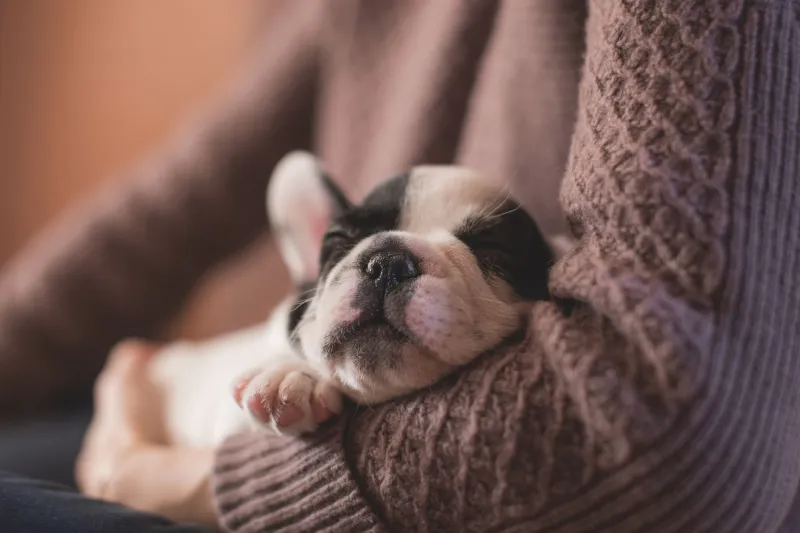
Snooze Fest: Making Sense of Your Frenchie Puppy's Legendary Sleep Habits
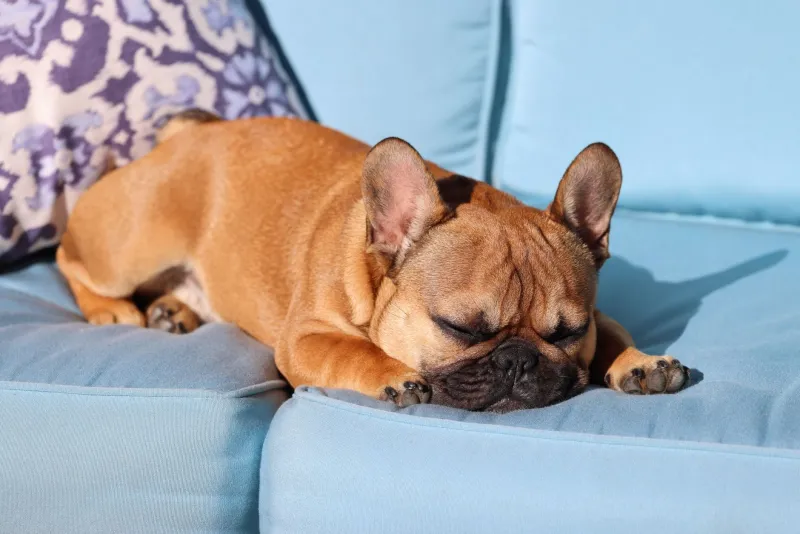
You finally brought your French Bulldog puppy home. You pictured chaos, zoomies, maybe a little mischief. What you got instead was... a tiny bat-eared potato who sleeps approximately forever. Don't panic. Don't Google "is my puppy in a coma." Just settle in, because we're about to break down everything you need to know about the Frenchie sleep schedule — including when all that napping is completely fine and when it's time to pick up the phone.
Why Puppies Sleep So Much in the First Place
Here's the thing most new dog owners don't realize: sleep isn't downtime for puppies. It's actually when a huge chunk of development happens. While your little Frenchie is out cold on your couch cushion, their brain is busy processing new experiences, their immune system is building strength, and their muscles and bones are literally growing. Growth hormone in puppies is released primarily during sleep — so all those naps are doing serious biological work.
Most puppies sleep anywhere from 18 to 20 hours a day during their first few months of life. Yes, that's not a typo. Nearly 20 hours. The remaining four to six hours are split between eating, playing, exploring, and — let's be honest — getting into something they shouldn't. This is completely normal across dog breeds, but French Bulldogs have a few extra reasons to lean hard into the nap life.
The Frenchie Factor: Why This Breed Sleeps Even More
French Bulldogs are a brachycephalic breed, meaning their flat faces and shortened airways make breathing a little more effortful than it is for longer-snouted dogs. All that snuffling and snorting you hear? That's your Frenchie working harder for every breath. As a result, physical activity — even mild play — is more taxing for them than it would be for, say, a Labrador. Their bodies need more recovery time, which naturally translates to more sleep.
Frenchies are also a lower-energy breed by nature. They weren't bred to herd sheep or retrieve game across open fields. They were bred to be companions — lap dogs, essentially — which means their baseline energy levels are already on the calmer side. Add puppyhood on top of that, and you've got a creature who is basically engineered to nap professionally.
Temperature regulation is another piece of the puzzle. Because of their flat faces, Frenchies can overheat more easily than other breeds. In warmer months especially, your puppy may sleep more as their body's way of conserving energy and staying cool. If you're in a warmer part of the US — think Texas, Florida, Arizona — this is worth keeping in mind during summer.
What a Normal Frenchie Sleep Schedule Looks Like
For puppies under four months old, expect long, frequent naps throughout the day with short bursts of activity in between. Think of it like a newborn baby's schedule — wake, eat, play briefly, crash hard, repeat.
As your pup gets a little older (four to six months), the nap sessions may shorten slightly and become a bit more predictable. They'll start having longer alert periods where they're genuinely engaged with the world around them. By the time they hit the one-year mark, most Frenchies settle into a more adult rhythm — still sleeping more than you'd probably expect (adults typically clock 12 to 14 hours a day), but with more defined wake windows.
A good rule of thumb for structuring your day: plan short play sessions and training moments right after your puppy wakes up naturally, when their energy is at its peak. Don't try to force activity when they're clearly ready to wind down — you'll frustrate yourself and stress them out.
Building Your Routine Around the Nap Schedule
New Frenchie owners sometimes make the mistake of trying to keep their puppy awake longer, thinking it'll help them sleep better at night. It usually does the opposite. An overtired puppy is actually harder to settle — they get cranky and overstimulated, which makes nighttime more chaotic, not less.
Instead, lean into the natural sleep rhythm. Here's a simple framework that works well for most Frenchie pups:
- Morning: Short potty break, brief play session or training (5–10 minutes max), then breakfast. Expect a nap to follow within an hour.
- Midday: Another short activity window after they wake up naturally. This is a great time for a little socialization or a calm walk.
- Afternoon: Nap. Probably a long one. Let it happen.
- Evening: Your puppy's most alert window of the day. This is prime time for bonding, gentle play, and any training you want to do.
- Nighttime: Wind down early. A consistent bedtime routine — same time, same spot, same cues — helps Frenchies settle faster and sleep through the night sooner.
Consistency is the key word here. Frenchies thrive on routine, and the more predictable their schedule, the more settled they'll be overall.
Red Flags: When Sleep Becomes a Concern
Okay, so now you know that a lot of sleep is normal. But there are situations where excessive sleep signals something worth checking out. Watch for these signs:
Lethargy vs. sleepiness. There's a difference between a puppy who sleeps a lot and then wakes up bright-eyed and playful, versus one who seems sluggish, disinterested, or hard to rouse even when awake. The latter is a red flag.
Not eating or drinking. If your puppy is sleeping through meals and showing no interest in food or water, that's not normal tiredness — that's something that needs a vet's attention.
Labored breathing during rest. Some snoring and snuffling is totally on-brand for a Frenchie. But if you notice your pup struggling to breathe, breathing with their mouth open constantly, or showing signs of respiratory distress even at rest, get them checked out. Brachycephalic Obstructive Airway Syndrome (BOAS) can affect some Frenchies more severely than others.
Sudden changes in sleep patterns. If your puppy was active and playful and then suddenly becomes unusually sleepy with no obvious cause (like a growth spurt or a big day out), a vet visit is a reasonable next step.
Pale gums, weakness, or unusual symptoms alongside sleepiness. These are urgent. Don't wait.
When in doubt, call your vet. It's always better to get a "your pup is totally fine, just a sleepy Frenchie" reassurance than to miss something that needed early attention.
The Bottom Line
Your French Bulldog puppy sleeping 18 to 20 hours a day isn't laziness — it's biology doing exactly what it's supposed to do. Between the demands of rapid development, the extra effort that comes with being a brachycephalic breed, and their naturally chill temperament, Frenchies are basically built to be champion nappers from day one.
Work with the sleep schedule instead of against it, keep an eye out for anything that seems off, and enjoy the quiet moments while they last. Because once your Frenchie hits that chaotic puppy energy window? You'll be wishing for nap time too.